
Behind every successful digital business sits an infrastructure layer that keeps applications running, data accessible, and customers happy.
The funny thing? Most people rarely think about it until something breaks.For years, organizations treated infrastructure as a basic support function, something that simply had to work. But that mindset is changing. Businesses now view infrastructure as a strategic asset that can improve agility, reduce costs, and support innovation.
That's where IaaS in cloud computing comes in.
Instead of investing heavily in physical servers, storage systems, and networking hardware, businesses can access these resources through the cloud and scale them whenever needed. In this guide, we'll explore what Infrastructure as a Service (IaaS) is, how it works, its benefits, and the real-world scenarios where it delivers the most value.
What Is IaaS in Cloud Computing?
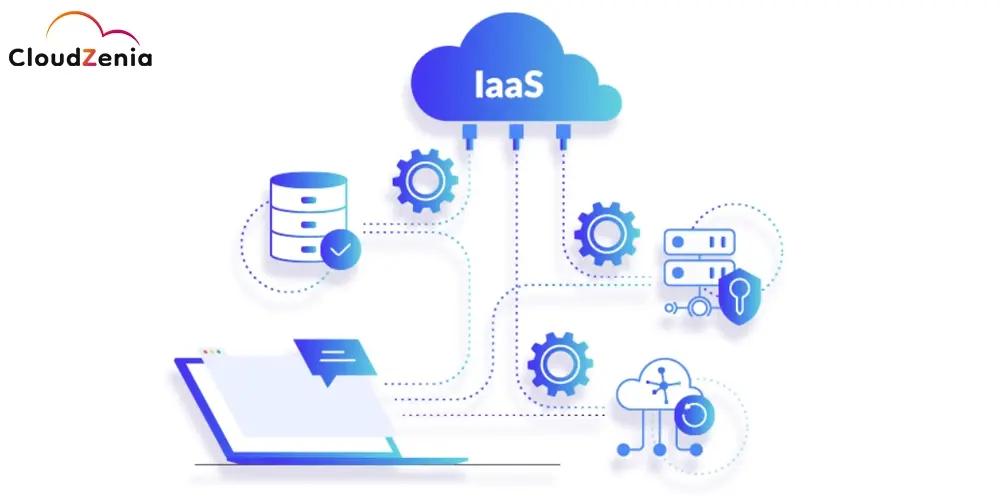
Infrastructure as a Service (IaaS) is a cloud computing model that provides organizations with virtualized computing resources over the internet. Rather than purchasing and maintaining physical infrastructure, businesses rent essential resources such as:
- Virtual servers
- Storage systems
- Networking components
- Computing power
The cloud provider manages the underlying hardware and infrastructure, while the organization controls operating systems, applications, and workloads.
Think of it like renting a fully equipped office instead of constructing a building from scratch. You get the resources you need without the burden of managing the entire infrastructure.
Why Are Businesses Investing in IaaS?
The demand for cloud infrastructure continues to grow rapidly. According to Fortune Business Insights, the global IaaS market was valued at $130.08 billion in 2023 and is projected to reach $738.11 billion by 2032, growing at a CAGR of 21.4%. A significant share of the market is led by major cloud providers such as:
- Amazon Web Services (AWS)
- Microsoft Azure
- Google Cloud Platform (GCP)
The reason for this growth is simple: businesses want infrastructure that can adapt as quickly as their needs change.
Also read : https://cloudzenia.com/blog/understanding-iaas-how-it-can-transform-your-business/
Key Benefits of IaaS Cloud Services
Lower Infrastructure Costs
Traditional infrastructure requires substantial upfront investment in servers, storage devices, networking equipment, and maintenance. With IaaS cloud services, organizations pay only for the resources they consume. This pay-as-you-go model helps reduce capital expenditure while making IT budgets more predictable.
Scale Resources on Demand
Business requirements rarely stay constant. A seasonal sale, product launch, or marketing campaign can dramatically increase traffic within hours. With IaaS, resources can be scaled up or down whenever required.
Server during normal traffic: 😎
Server during Black Friday traffic: 💀
Thankfully, cloud infrastructure can handle the panic before your IT team has to.
Faster Deployment
Provisioning traditional infrastructure can take days or even weeks. IaaS allows organizations to deploy resources in minutes, enabling teams to respond quickly to new opportunities and changing business demands. This speed is especially valuable for development teams working on time-sensitive projects.
Greater Business Agility
Because infrastructure is readily available, businesses can experiment with new applications, launch services faster, and adapt to changing market conditions without significant hardware investments.
Support for Hybrid Cloud Strategies
Many organizations prefer a hybrid cloud approach that combines public and private cloud environments. This setup provides:
- Better flexibility
- Improved workload management
- Enhanced cost optimization
- Greater control over sensitive data
Workloads can move between environments as business requirements evolve.
How IaaS Supports Modern Business Growth
IaaS is about more than reducing infrastructure costs. It allows organizations to shift focus away from hardware management and toward activities that drive business value. Instead of spending resources maintaining servers, teams can invest their time in:
- Product development
- Innovation
- Customer experience
- Data-driven decision making
This operational flexibility is one of the biggest reasons enterprises continue adopting cloud infrastructure services.
Top IaaS Use Cases and Examples
Let's look at some of the most common scenarios where IaaS delivers measurable business value.
Need help with your cloud infrastructure?
Our experts at CloudZenia are ready to help you build, scale, and secure your setup.
Book a Free Consultation1. Running Additional Cloud Services
IaaS provides the foundation for a wide range of cloud-based services. Organizations use it to support:
- Analytics-as-a-Service
- Business Intelligence platforms
- Recovery-as-a-Service
- Computing-as-a-Service
Because the infrastructure is already available, deploying additional services becomes faster and more efficient.
2. Disaster Recovery and Business Continuity
Downtime can be expensive. IaaS enables organizations to consolidate disaster recovery systems into a centralized virtual environment. Benefits include:
- Simplified backup management
- Improved data protection
- Faster recovery times
- Reduced infrastructure complexity
This ensures critical business data remains available even during unexpected disruptions.
3. Big Data Processing and Analytics
Modern businesses generate massive volumes of data from:
- Customer interactions
- IoT devices
- Social media platforms
- Emails
- Applications
- Databases
Processing and analyzing this information requires significant computing resources. IaaS offers the scalability needed to handle large workloads while integrating seamlessly with business intelligence tools. As a result, organizations can uncover insights, predict trends, and make smarter decisions.
4. Networking as a Service
Managing modern networks can be challenging and resource-intensive. Many businesses leverage IaaS providers for networking services, allowing internal IT teams to focus on higher-priority initiatives. This approach is particularly useful for temporary projects, large-scale data operations, and rapidly expanding environments.
5. Development and Testing Environments
Development teams often need flexible environments for building, testing, and deploying applications. IaaS makes this possible by providing:
- On-demand computing resources
- Reliable infrastructure
- Enhanced scalability
- Faster provisioning
Instead of waiting for hardware setup, developers can create environments instantly and accelerate software delivery.
Also read : https://cloudzenia.com/blog/future-proof-your-business-with-cloud-native-application-development/
Final Thoughts
Infrastructure no longer needs to be a constraint on growth. IaaS in cloud computing gives businesses access to scalable, flexible, and cost-efficient resources without the burden of managing physical hardware. Whether you're building development environments, processing big data, strengthening disaster recovery capabilities, or supporting hybrid cloud initiatives, IaaS provides the foundation needed to operate efficiently and adapt quickly.
As cloud adoption continues to accelerate, organizations that leverage IaaS effectively will be better positioned to scale operations, innovate faster, and respond to changing business demands.
Frequently Asked Questions
Q. What is IaaS in cloud computing?
Infrastructure as a Service (IaaS) is a cloud computing model that provides virtualized resources such as servers, storage, networking, and computing power over the internet. Instead of purchasing physical hardware, organizations can access and scale these resources on demand through a cloud provider.
Q. What are the main benefits of IaaS?
The key benefits of IaaS include reduced infrastructure costs, on-demand scalability, faster resource deployment, improved business agility, and simplified infrastructure management. Businesses only pay for the resources they use, making it a cost-efficient solution.
Q. What are some common use cases of IaaS?
IaaS is commonly used for disaster recovery, development and testing environments, big data analytics, cloud hosting, networking services, and running business applications. It is especially useful for organizations with fluctuating workloads and growth-oriented infrastructure needs.
Q. How is IaaS different from PaaS and SaaS?
IaaS provides the underlying infrastructure such as virtual machines and storage. Platform as a Service (PaaS) offers a development platform where applications can be built and deployed, while Software as a Service (SaaS) delivers fully managed software applications directly to end users through the internet.
Q. Is IaaS suitable for small and medium-sized businesses?
Yes. IaaS is particularly beneficial for small and medium-sized businesses because it eliminates the need for large upfront investments in hardware. It allows businesses to access enterprise-grade infrastructure, scale resources as needed, and maintain greater flexibility while controlling costs.
Filed under