
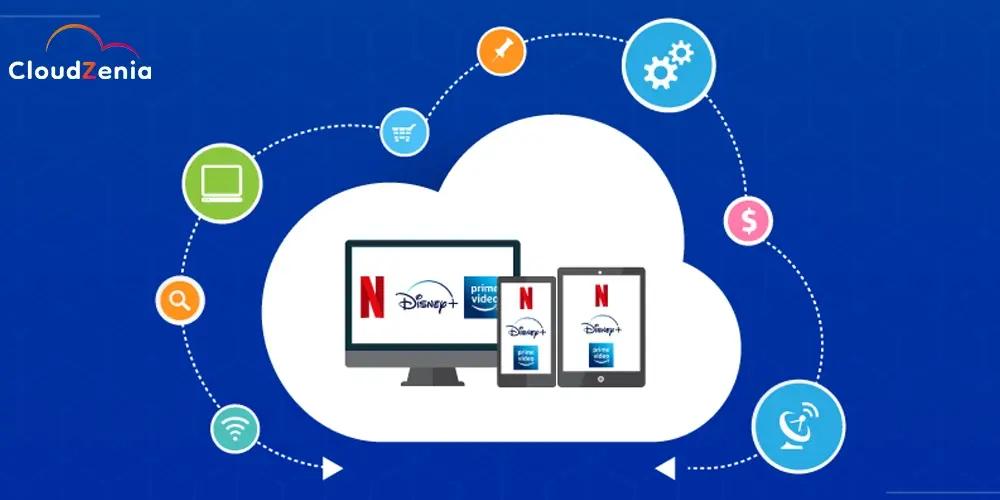
Streaming today feels effortless for viewers. They hit play and expect fast loading, high-quality video, and uninterrupted playback. Behind the scenes, however, OTT platforms must handle massive traffic spikes from live events, new releases, and viral content.
To keep streams running smoothly at scale, many OTT providers are adopting multi-cloud strategies. By distributing workloads across multiple cloud environments, they can improve performance, reliability, scalability, and security. As streaming demand continues to grow, multi-cloud is quickly becoming a necessity rather than a competitive advantage.
TL;DR
- Delivers faster and more reliable streaming by distributing workloads across multiple cloud providers.
- Helps OTT platforms scale efficiently during sudden traffic spikes and peak viewing periods.
- Reduces downtime by improving infrastructure resilience and failover capabilities.
- Enhances content delivery performance by bringing services closer to viewers.
- Strengthens security and supports compliance requirements across different regions.
- Optimizes infrastructure costs by leveraging the strengths of multiple cloud environments.
- Provides the flexibility needed to support growing global streaming audiences at scale.
Why OTT Platforms Are Moving Toward Multi-Cloud
For years, many companies relied on a single cloud provider to run their applications and services. While that approach worked in the early stages of digital transformation, modern OTT platforms face a very different reality.
Today's streaming services serve audiences across multiple countries, devices, and network conditions. They manage vast content libraries, support live streaming events, process massive amounts of data, and handle millions of concurrent users. Depending entirely on one cloud environment can create limitations in scalability, performance, and resilience.
A multi-cloud strategy addresses these challenges by allowing platforms to spread workloads across different providers. Rather than putting all infrastructure resources in one place, companies can leverage the strengths of multiple cloud ecosystems while reducing dependence on a single vendor.
Think of it like having multiple highways leading to the same destination. If one route becomes congested, traffic can move through another path without bringing everything to a standstill.
Scaling Without Breaking the Viewing Experience
Every OTT platform experiences traffic spikes. A highly anticipated season finale, a global sporting event, or a celebrity livestream can attract millions of viewers within a very short period. The challenge isn't just handling that traffic. It's maintaining a smooth viewing experience while doing so.
Multi-cloud architecture allows platforms to dynamically scale resources across multiple providers whenever demand increases. Instead of forcing one infrastructure environment to absorb the entire load, resources can be distributed wherever additional capacity is available. This flexibility helps maintain streaming quality during peak periods while avoiding unnecessary infrastructure costs during quieter times.
The result is simple: viewers keep watching without interruptions, and businesses avoid paying for resources they don't constantly need.
Also read : https://cloudzenia.com/blog/k8s-series-part-4-scaling-and-load-balancing-with-kubernetes/
Bringing Content Closer to Viewers
Distance plays a bigger role in streaming performance than many people realize. When content has to travel long distances between servers and users, delays become more noticeable. Even small increases in latency can affect video startup times, buffering frequency, and playback quality.
Multi-cloud strategies help OTT providers place infrastructure and services closer to their audiences across different regions. By leveraging cloud environments located around the world, streaming platforms can deliver content from locations that are geographically closer to viewers.
This reduces latency, improves load times, and creates a smoother viewing experience. For users, the difference may feel small. For platforms serving millions of subscribers, those milliseconds can have a significant impact on engagement and retention.
Also read : https://cloudzenia.com/blog/how-netflix-uses-cloud-technology-to-deliver-seamless-streaming/
Why Reliability Matters More Than Ever
Few things frustrate viewers more than an outage during an important event. Imagine a live sports final reaching its most exciting moment only for the stream to suddenly stop. Social media would likely react before the support team even receives the first complaint.
A multi-cloud approach reduces this risk by distributing workloads across multiple cloud providers. If one provider experiences an outage or performance issues, traffic can automatically be redirected to another environment. Instead of bringing the entire platform offline, the system continues operating with minimal disruption.
In the OTT world, reliability isn't a bonus feature. It's the expectation. The best streaming interruptions are the ones viewers never notice.
Need help with your cloud infrastructure?
Our experts at CloudZenia are ready to help you build, scale, and secure your setup.
Book a Free ConsultationSmarter Cost Optimization Through Multi-Cloud
Many discussions about multi-cloud focus on performance and reliability, but cost optimization is equally important.
Different cloud providers excel in different areas. One may offer more affordable storage services, while another provides stronger computing capabilities or better network performance. By selecting the right provider for each workload, OTT platforms can optimize spending without sacrificing quality.
Multi-cloud strategies also help businesses avoid vendor lock-in. When organizations aren't dependent on a single provider, they gain more flexibility to adapt pricing models, migrate workloads, and negotiate contracts more effectively. Over time, these advantages can translate into significant operational savings while maintaining a high level of service quality.
Faster Streaming Through Edge Computing and CDNs
Modern viewers expect content to load almost instantly. Whether they're watching a live sporting event, an interactive stream, or on-demand content, delays can quickly impact the viewing experience. This is where edge computing becomes increasingly valuable.
Instead of processing and delivering all content from centralized infrastructure, edge computing moves services closer to end users. Data can be processed at locations nearer to viewers, reducing latency and improving responsiveness.
Multi-cloud environments strengthen this capability by allowing OTT platforms to leverage edge services and content delivery networks across multiple providers. The combination helps reduce buffering, improve playback consistency, and support high-quality streaming experiences across different regions. For viewers, it simply feels faster. For OTT businesses, it can be the difference between retaining subscribers and losing them.
Strengthening Security and Compliance
OTT platforms manage a tremendous amount of valuable information, including user accounts, payment details, viewing behavior, and licensed content. Protecting that data is essential for maintaining trust and business continuity.
A multi-cloud strategy enables organizations to combine security capabilities from multiple providers, creating a more resilient infrastructure. Features such as advanced encryption, threat detection systems, identity management controls, and distributed backups can work together to strengthen overall protection.
Compliance is another growing concern. Different countries have different regulations regarding data privacy and storage requirements. Multi-cloud environments give OTT providers greater flexibility in deciding where data is stored and processed, making it easier to meet regional compliance obligations while maintaining operational efficiency.
What the Future Looks Like
The next phase of OTT growth will be shaped by intelligent infrastructure decisions. As audience expectations continue to rise, platforms will increasingly rely on technologies that improve performance, automate operations, and optimize resource allocation.
We're already seeing greater adoption of AI-driven cloud optimization, real-time analytics, edge-native architectures, and automated workload management. These technologies help platforms predict demand, improve efficiency, and deliver more consistent experiences to viewers around the world.
The goal isn't simply to use multiple cloud providers. The goal is to build an infrastructure that remains invisible to the viewer while delivering exceptional performance behind the scenes.
Final Thoughts
As competition in the OTT industry intensifies, delivering a reliable and high-quality streaming experience has become more important than ever. Multi-cloud architecture provides the scalability, resilience, performance, security, and cost efficiency needed to support modern streaming platforms at a global scale.
Viewers may never know how content reaches their screens so quickly, but they immediately notice when something goes wrong. Multi-cloud strategies help ensure that doesn't happen.
Because at the end of the day, subscribers don't choose a streaming platform because of its cloud architecture. They choose it because everything works exactly as expected. And increasingly, multi-cloud is what makes that possible.
Frequently asked Questions
Q. What is a multi-cloud strategy in OTT platforms?
A multi-cloud strategy involves using two or more cloud providers to run applications, store content, and manage infrastructure. For OTT platforms, this approach improves reliability, scalability, and performance by distributing workloads across multiple cloud environments instead of relying on a single provider.
Q. Why are OTT platforms adopting multi-cloud architectures?
OTT platforms adopt multi-cloud architectures to reduce downtime, improve streaming performance, handle traffic spikes more efficiently, and avoid vendor lock-in. By leveraging multiple cloud providers, they can deliver a more consistent viewing experience to global audiences.
Q. How does multi-cloud improve streaming performance?
Multi-cloud improves streaming performance by allowing content and services to be deployed closer to viewers across different regions. This reduces latency, speeds up video loading times, minimizes buffering, and helps maintain consistent playback quality during peak demand.
Q. Can a multi-cloud strategy reduce costs for OTT businesses?
Yes. A multi-cloud strategy enables OTT providers to choose the most cost-effective cloud services for different workloads, such as storage, computing, or content delivery. This helps optimize infrastructure spending while maintaining high performance and scalability.
Q. What role does multi-cloud play in disaster recovery and business continuity?
Multi-cloud architecture strengthens disaster recovery by distributing workloads across multiple cloud environments. If one provider experiences an outage, services can fail over to another provider, reducing downtime and ensuring uninterrupted content delivery for viewers.
Filed under