
Transforming Telecom with scalable networks, enhanced security, and real-time data processing.
As a matter of fact, cloud computing is no longer a cutting-edge concept. It allows service providers to accelerate information, boost operational efficiency, and deliver remarkable customer experiences. Therefore, cloud computing and technology have emerged as a groundbreaking force and are the foundation of the advanced telecommunications industry. By applying and utilising cloud-based services, telecom providers are transforming the way they operate, deliver services, and communicate with customers. Cloud platforms enable network management with more flexibility, making it more programmable by decoupling the control plane from the data plane in the network.
Cloud leverages NFV to virtualise network functions like routers, firewalls, and load balancers benefitting telecom operators by enhancing agility and lowering capital costs.
By using cloud computing and infrastructure, SDN offers more flexibility to optimise traffic flow by organising and managing SDN-based networks and responding to altering demands.
Cloud platforms provide the required power and storage capacity to process and analyse vast data amounts generated by telecom networks used to improve customer experience and network performance.
Cloud computing helps telecom operators streamline operations and automate processes, thereby, lowering operational expenditure through service orchestration and network provisioning.
Cloud infrastructure significantly contributes to the successful deployment and operation of 5G. Besides, 5G core networks allow quicker service deployment, and improved network performance and scalability.
Cloud-based solutions allow telecom operators to provide more engaging and personalised customer experiences including omnichannel communication, customised services, and proactive customer support.
CloudZenia supports you at every stage, delivering reliable, high-quality services at competitive prices.
| ASPECT | Traditional Telecom Workflows | Cloud-Based Telecom Workflows |
|---|---|---|
Flexibility | Less flexible, changes to services can be time-consuming and costly. | Highly flexible, new services and features can be deployed quickly and easily. |
Disaster Recovery | Needs considerable expenditure for disaster recovery solutions and backup. | Built-in disaster recovery capabilities, often provided by cloud providers. |
Infrastructure | Dependent on in-house software and hardware. | Incorporates cloud-based infrastructure like SaaS, IaaS, and PaaS due to reliability and consistency. |
Scalability | Restricted scalability. Needs considerable initial expenses to expand. | Immensely scalable. Depending on demand, resources are easy to adjust. |
Maintenance | Needs dedicated IT staff for upgradation and maintenance purposes. | Needs the least maintenance and is taken care of by the cloud provider. |
Innovation | Adopts new services and technologies at a slower pace. | Agility helps it adopt new services and technologies relatively faster. |
Cost | Initial investment is quite high for software, hardware, and maintenance. | Initial investment is comparatively lower due to pay-as-you-go model. |
To improve the efficiency of operation, scalability, agility and cost-effectiveness, major telecom giants worldwide are adopting cloud migration. Here are a few renowned examples of leading telecom giants. Here are a few renowned examples of leading telecom giants.

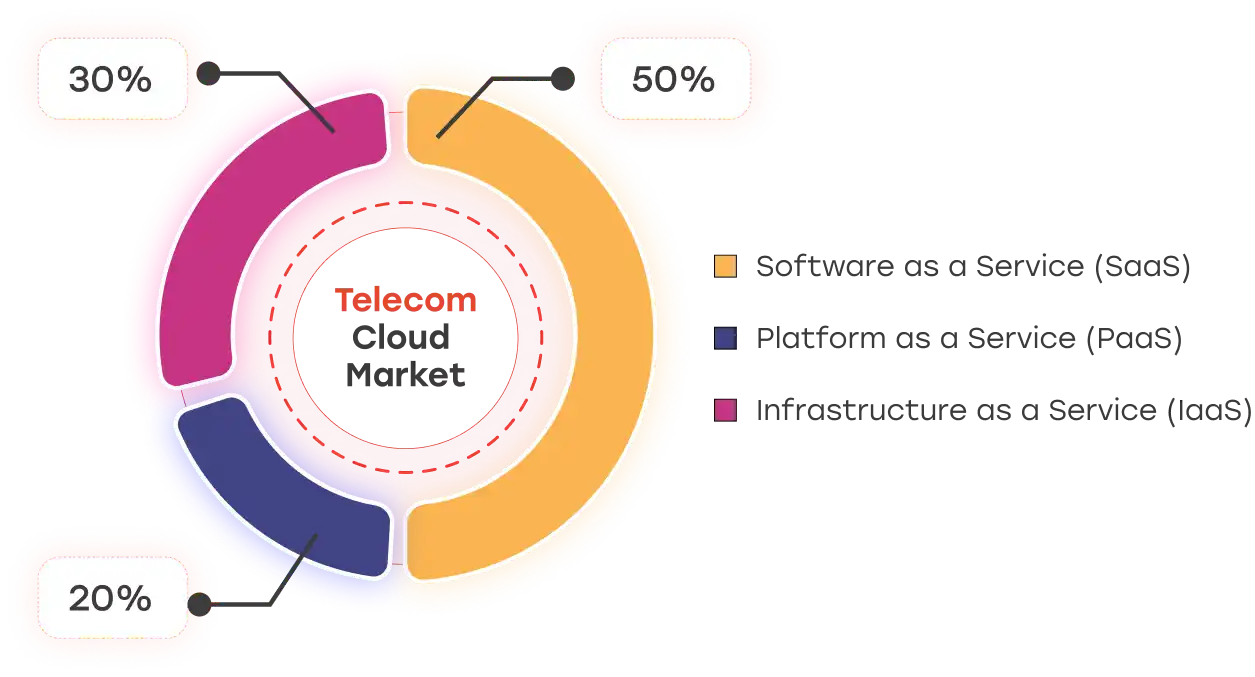
This major telecom giant utilises Microsoft Azure for leading functions like its 5G core network. It also retains certain work on its infrastructure.

By deploying a 5G network totally on AWS and its unwavering loyalty to cloud-native infrastructure, DISH has made a drastic move in the telecom world.

Leverages cloud-based solutions, specifically for edge computing applications and 5G core network deployments. Vodafone is merging with several cloud providers to adopt their infrastructure.

For innovative 5G services, this Canadian telecom provider has amalgamated with Google Cloud to deploy its 5G SA core on the Google Distributed Cloud Edge platform.

By investing in cloud-native technologies (public and private cloud solutions), this German telecom company is streamlining their network infrastructure.
By leveraging cloud-based platforms and core network functions, this French telecom operator works on the development and deployment of new digital services.
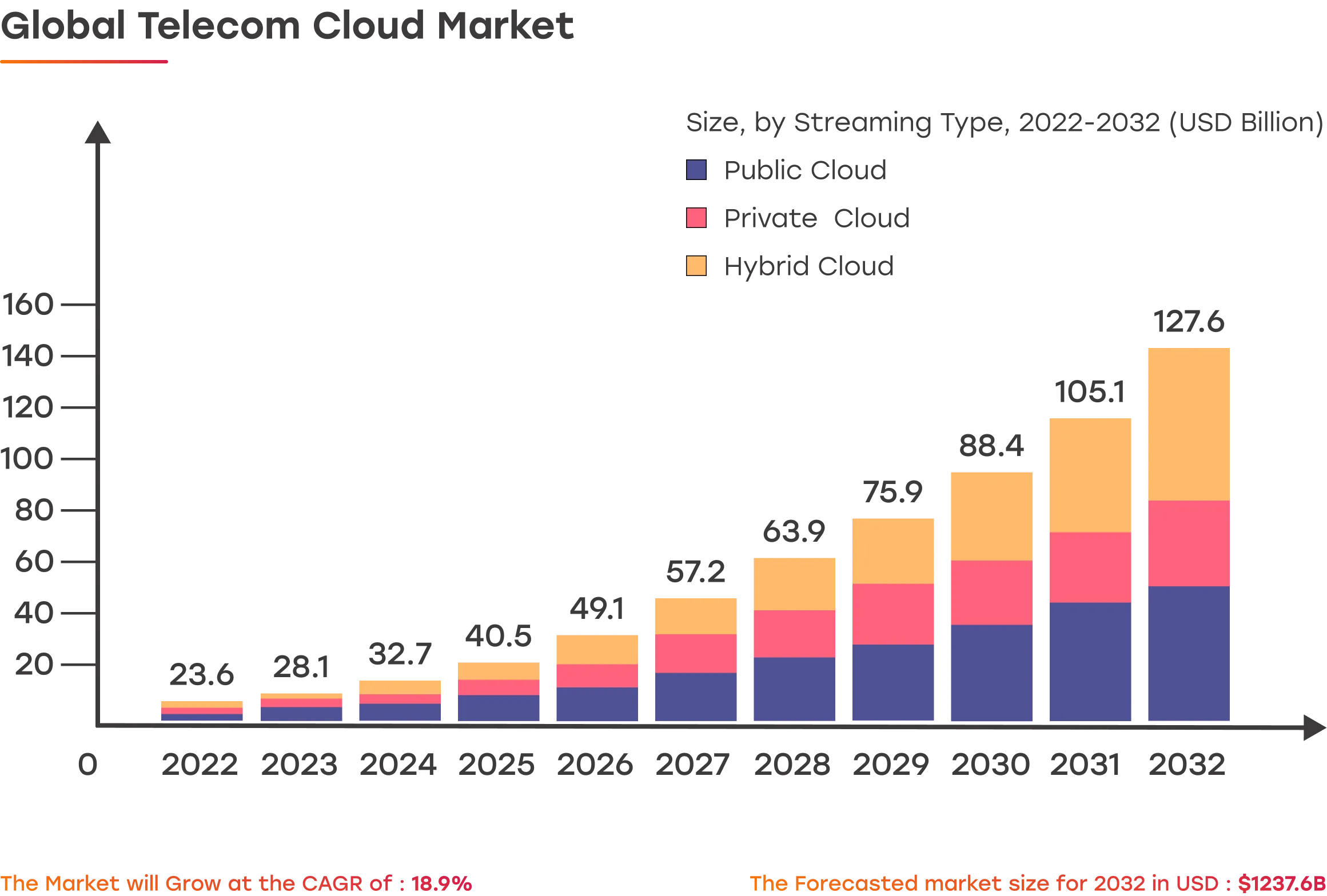
By embracing cloud technologies, telecom companies have witnessed extraordinary growth as the cloud streamlines their networks and delivers next-generation services.
CloudZenia leverages AI/ML to identify and prevent fraudulent activities including SIM swapping and international roaming abuse. This also helps reduce downtime by predicting and preventing connectivity issues.
Our self-service portals and AI-powered chatbots foster quicker, consistent, and more productive customer support for web, mobile, and physical stores. We also offer customised promotions and services to subscribers.
Besides leveraging cloud-native technologies like microservices and containers, we also incorporate agile methodologies to expedite new services and applications like IoT, 5G, and edge computing.
We are committed to lowering capital costs by moving infrastructure to the cloud instead of physical. You benefit by paying only for the utilised resource. Additionally, we automate tasks such as patching and scaling.
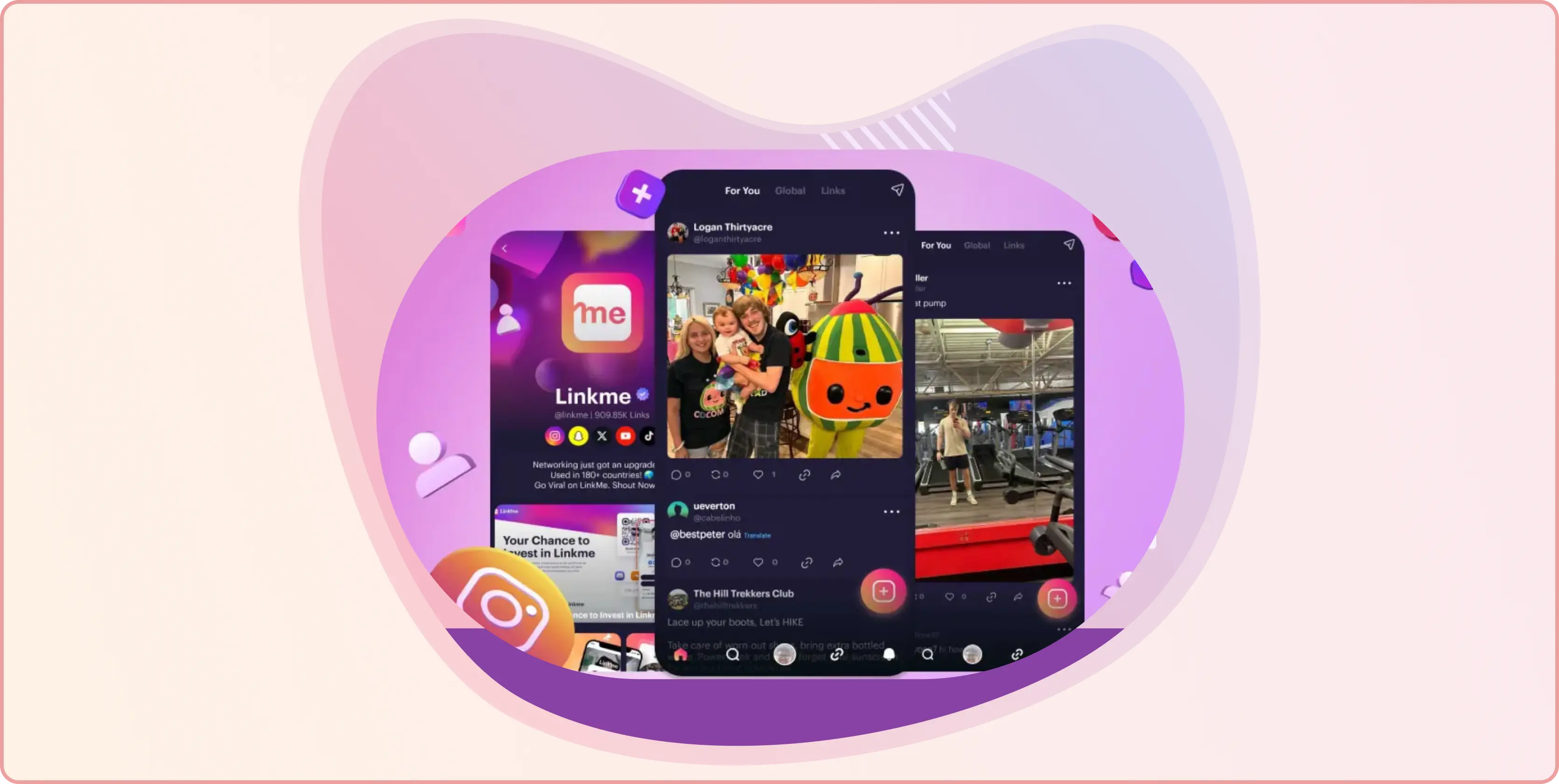
Linkme is a social networking platform designed to facilitate easier and more effective networking by consolidating all of a user's social media profiles and links into one place LinkMe aims to simplify how people connect and share online...

Mormati, an emerging regional OTT platform, required a robust backend infrastructure capable of handling extensive media uploads, processing, and seamless content delivery to users on both mobile and web platforms...
Cloud technology refers to incorporating cloud-based services and infrastructure to deliver and manage telecom services without relying solely on physical hardware.
Cloud technology improves network performance and offers telecom companies security, flexibility, scalability, and low-cost operational efficiency.
Yes, cloud technology is secure as cloud providers invest significantly in security measures like intrusion detection, encryption, and access controls.
Network optimisation, improved customer success, cost reduction, and predictive maintenance are some of the common use cases of cloud in the telecom industry.
CloudZenia can help you wherever you are in your cloud journey. We deliver high quality services at very affordable prices.